
Unifying the delivery workflow to help SMBs thrive in the digital age.

Flexible editing interaction for financial reporting.
Clear information display for every delivery task.
Tailored task management workflow for logistic drivers.
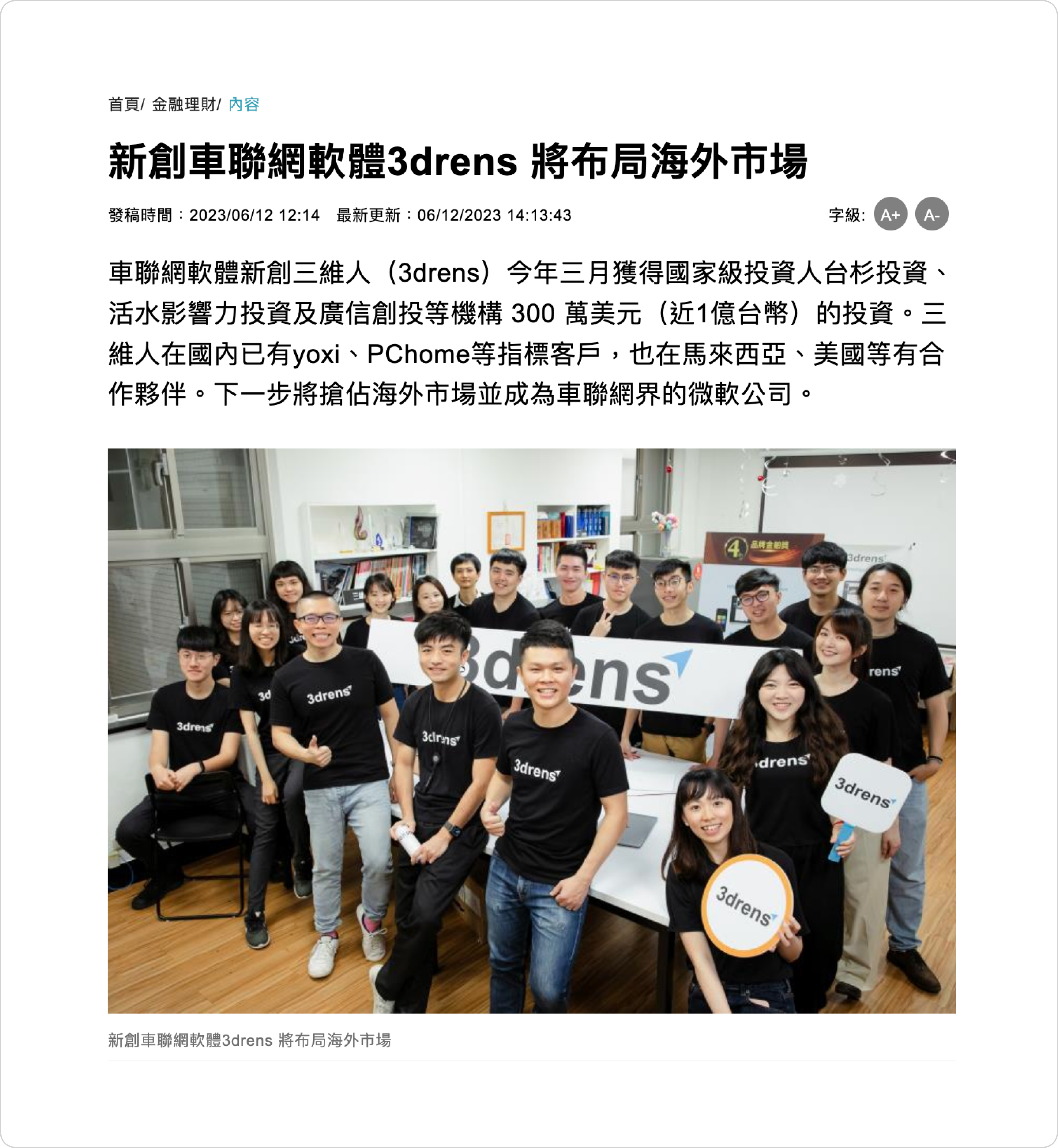
3drens provides a Logistics SaaS platform for SMBs. After securing Pre-A funding, the company aimed for Product-Market Fit (PMF). However, the app, originally designed for a singular logistics provider, wasn't suitable for the diverse needs of the broader industry.
To deeply understand the daily struggles within SMB logistics, I conducted extensive user research, including 34 interviews with drivers and logistics managers, on-site field studies in warehouses, and expert interviews with large logistics company executives.
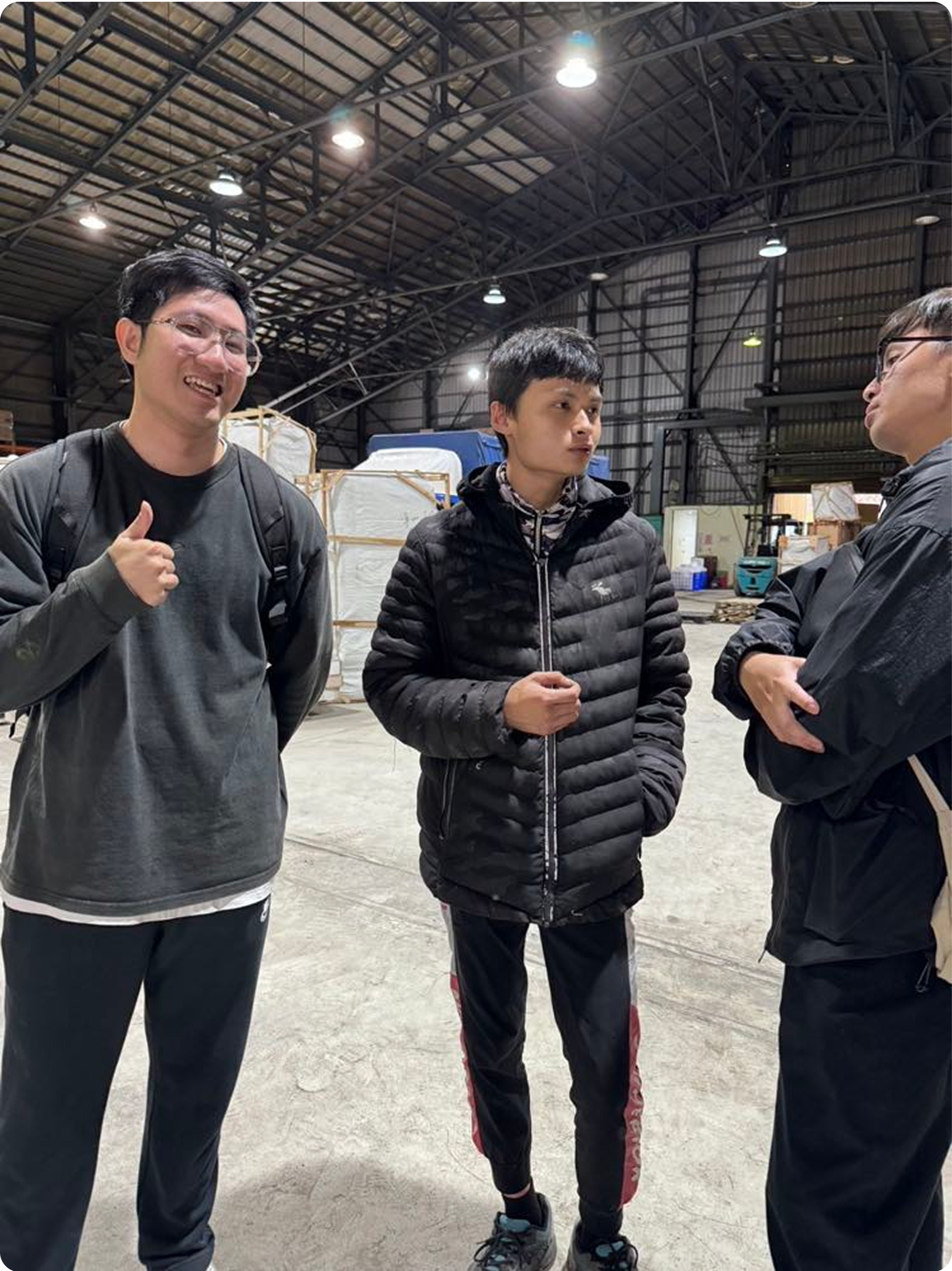
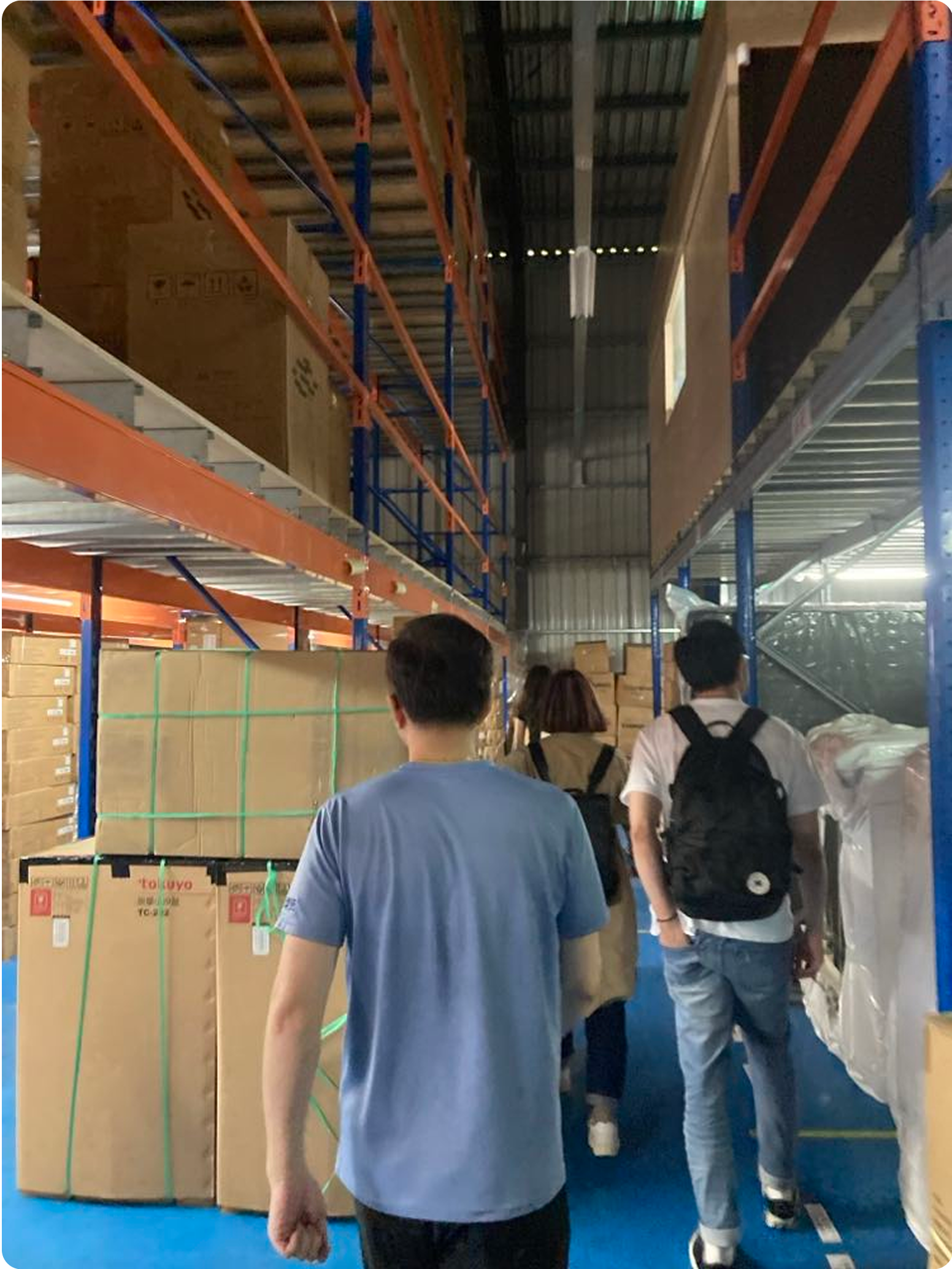
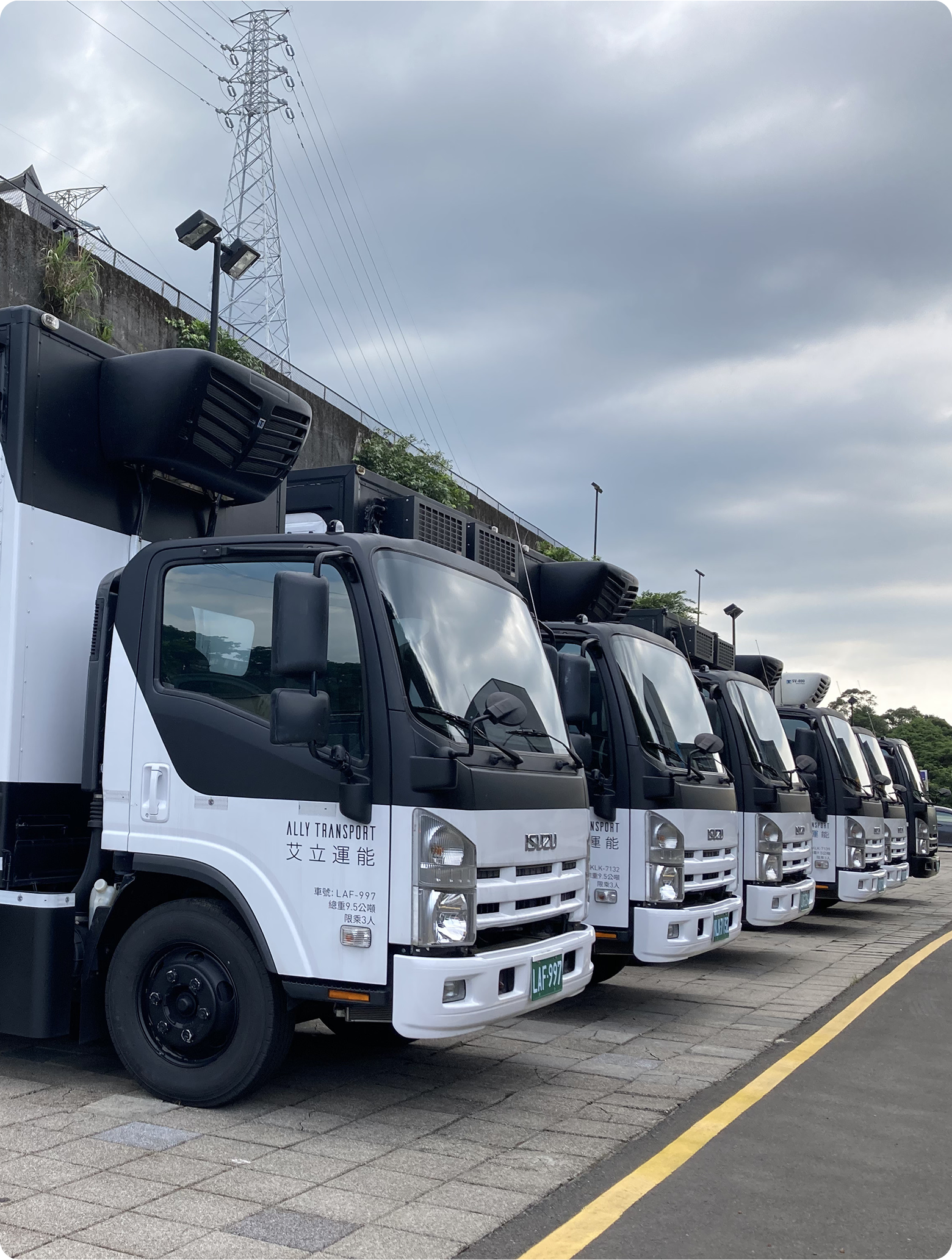
This research quickly revealed critical operational bottlenecks:
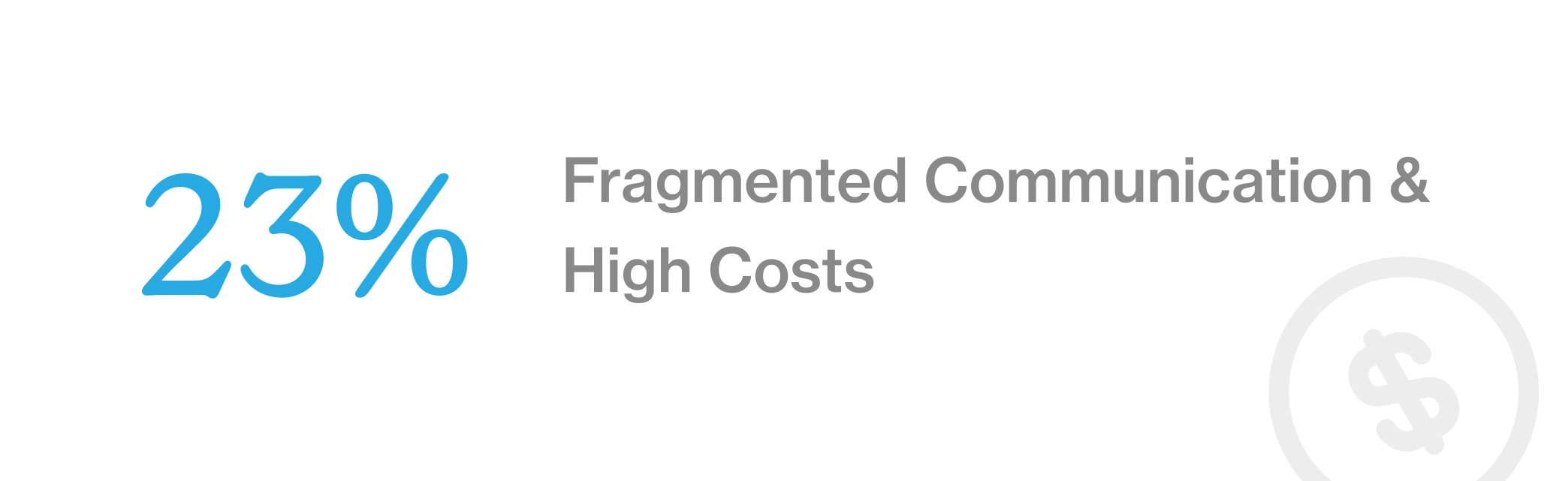
23% of surveyed companies faced high communication costs and delayed reporting due to reliance on disparate messaging apps (like Line, a common used messaging app in Taiwan). This resulted in significant information gaps, billing errors, and increased customer complaints.
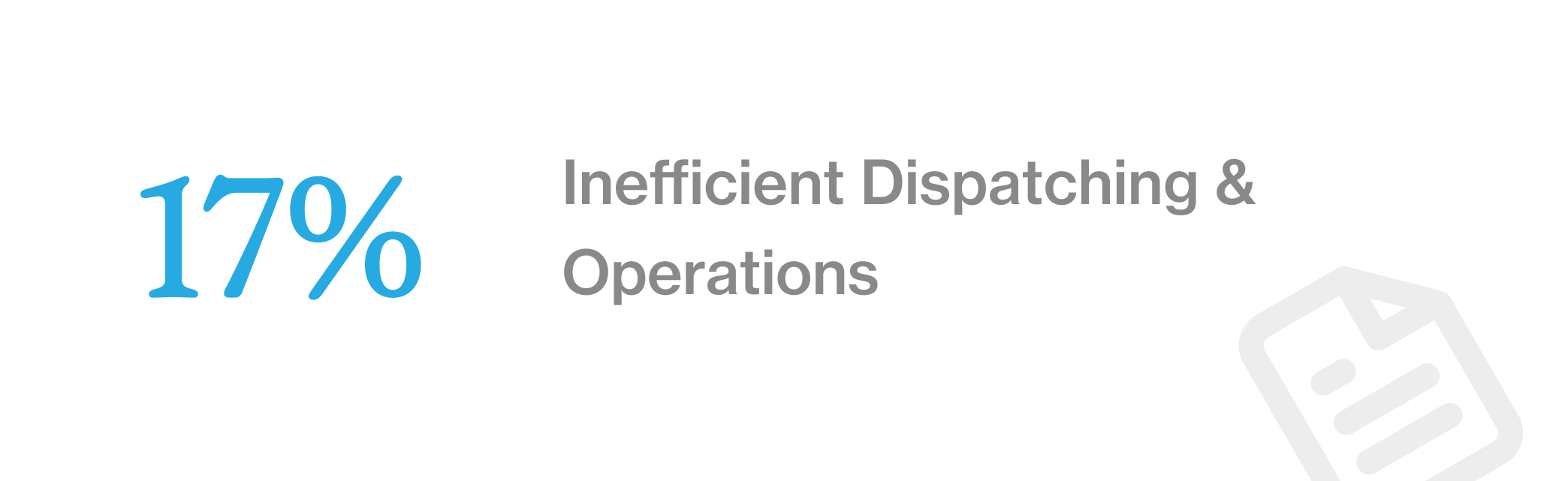
17% of companies urgently sought improved dispatching methods, indicating a widespread struggle with optimizing delivery efficiency and managing dynamic routes effectively.
Moreover, I collaborated with the Scrum team to synthesize all interview data, developing a driver journey map that visually aligned our team on key pain points and opportunities within the entire delivery workflow.
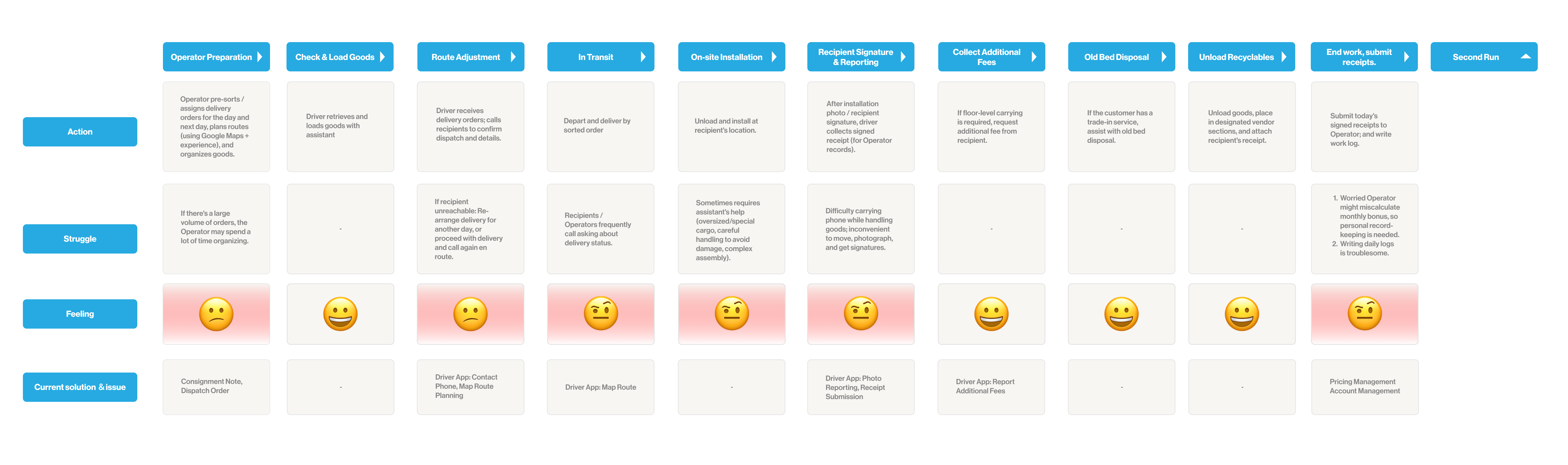
The insights gathered from drivers and logistics managers revealed a clear need for greater efficiency and intuitive operational control. Consequently, our design goals aimed to streamline core driver workflows and enhance real-time information clarity.
Here were our primary design objectives for the 3drens Driver App:
To achieve our core objectives, I led the design and iterative development of several key features. My solutions evolved through a continuous process, integrating customer feedback gathered from the Business Development team, insights from heuristic evaluations, and findings from internal usability testing.
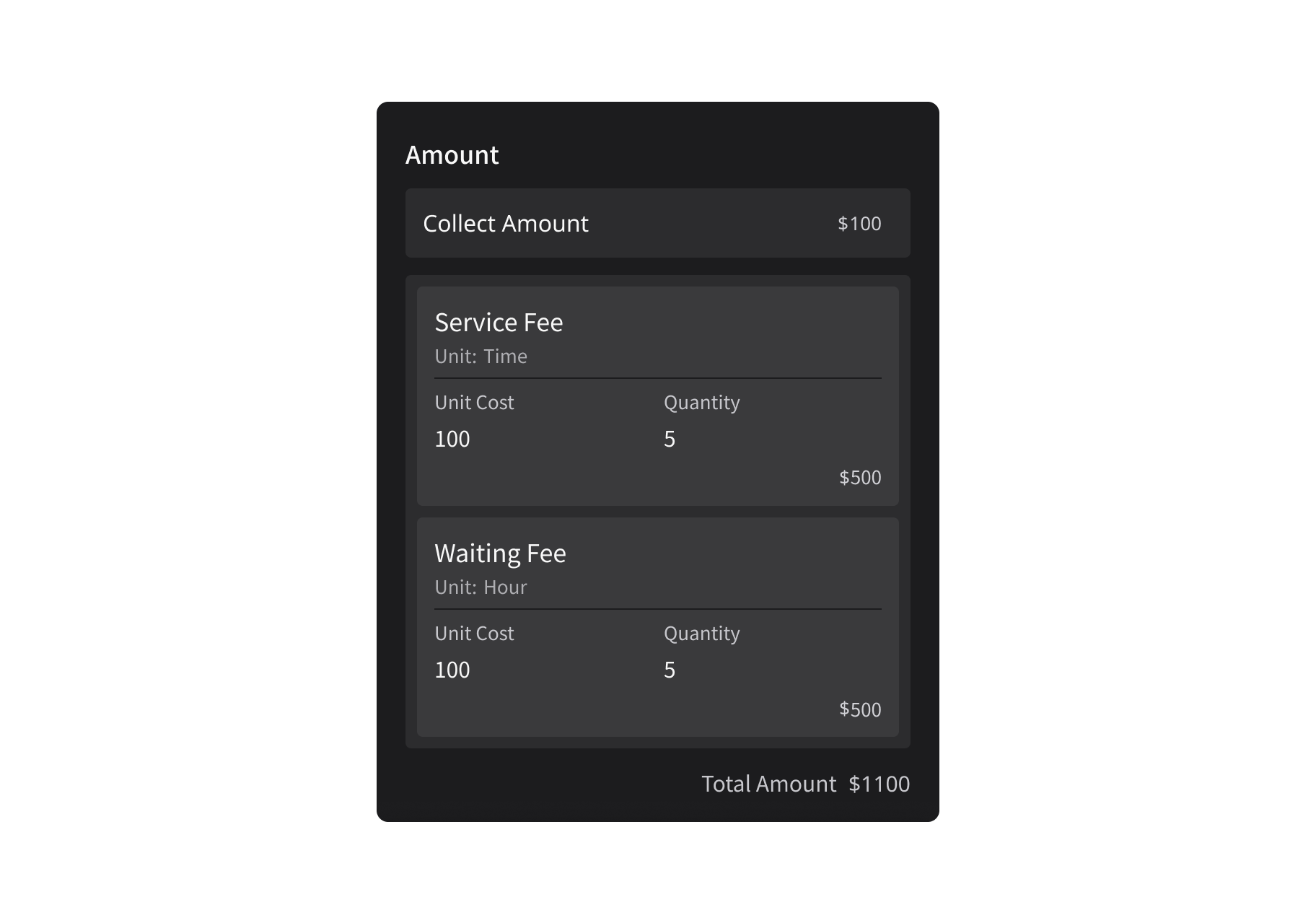
Manual and cumbersome payment reporting led to frequent discrepancies and errors for drivers, impacting overall delivery efficiency. My goal was to streamline this critical interaction, particularly for collected amounts and additional fees.
Translate research Insight to Design:

To address these critical insights, I redesigned the financial reporting interaction, drastically improving clarity and efficiency:
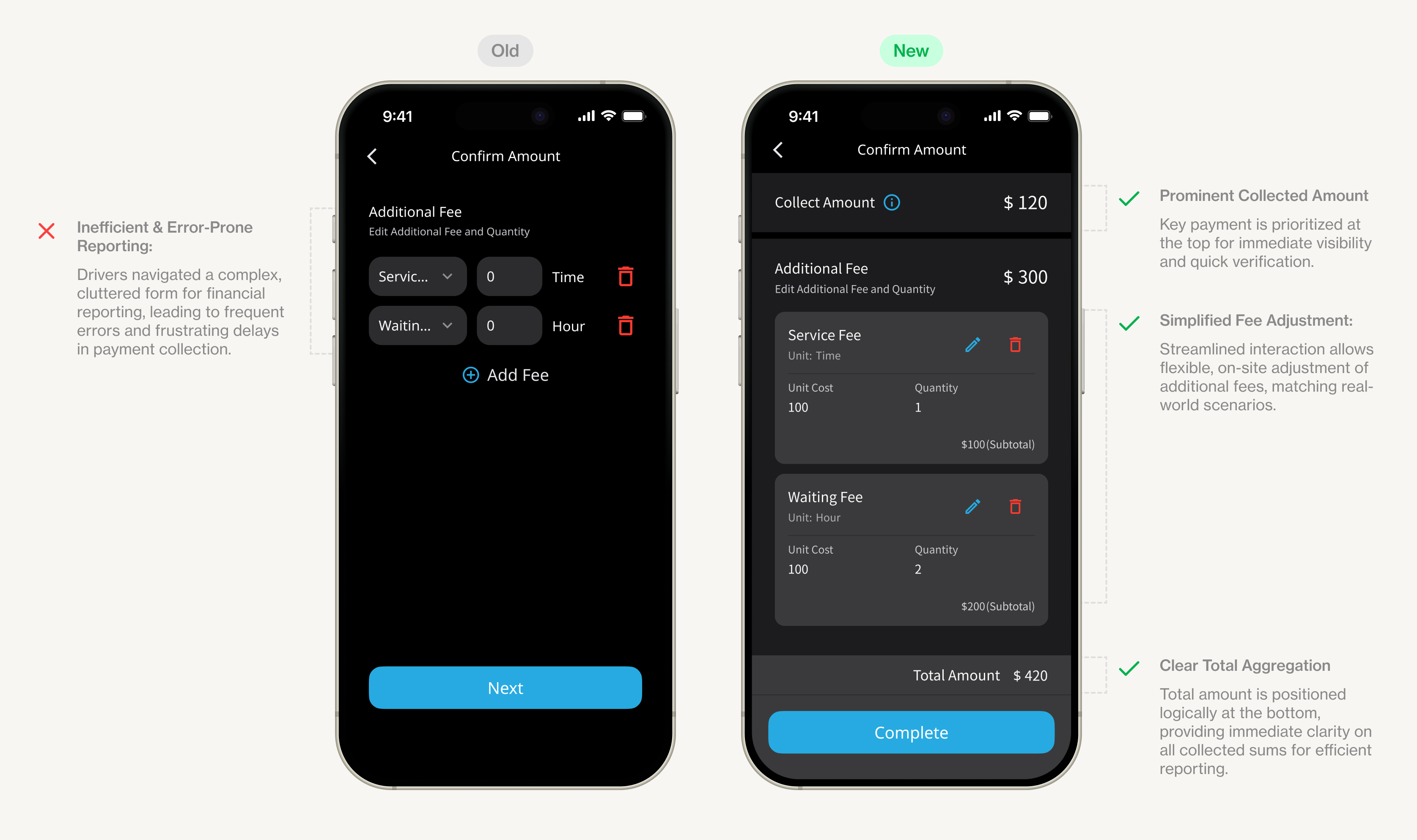
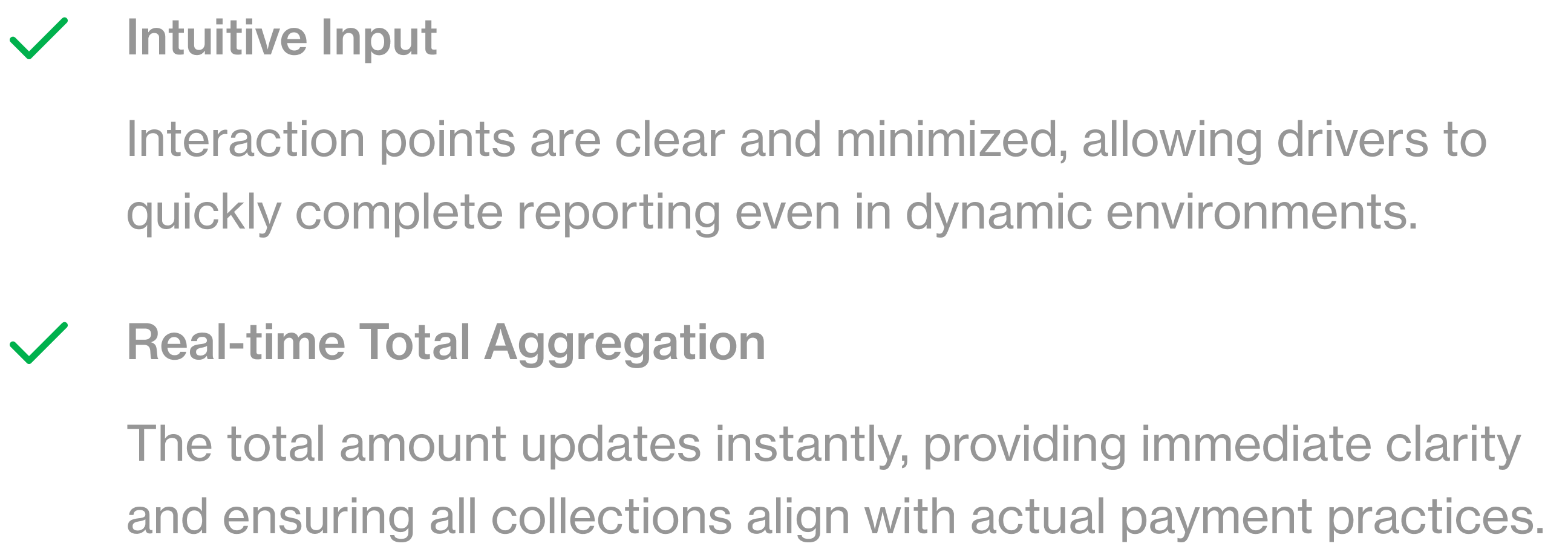
My design focuses on empowering drivers with flexible, real-time control over financial entries, enhancing accuracy and speed.
After completing the delivery, drivers can view the payment record on the task information page.
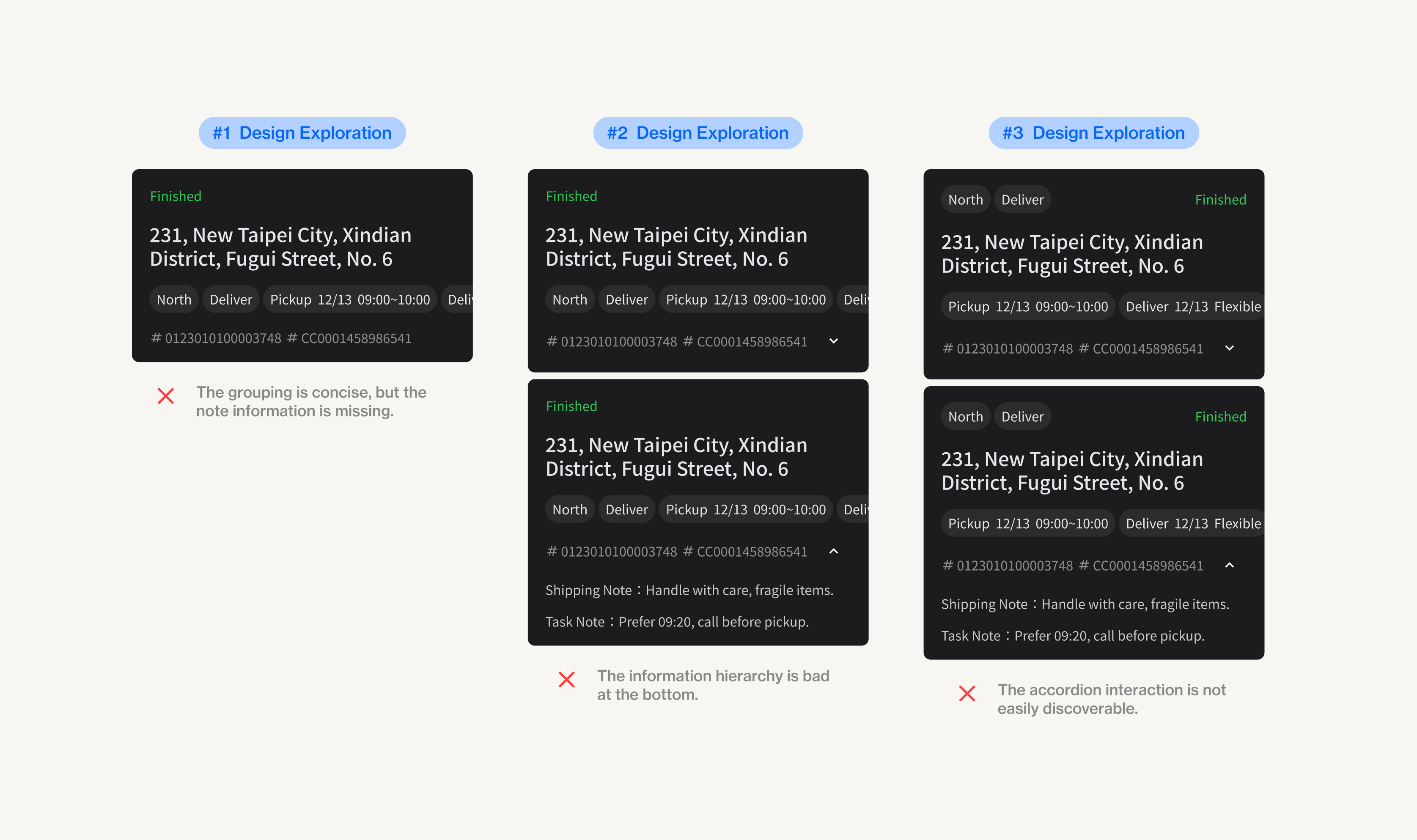
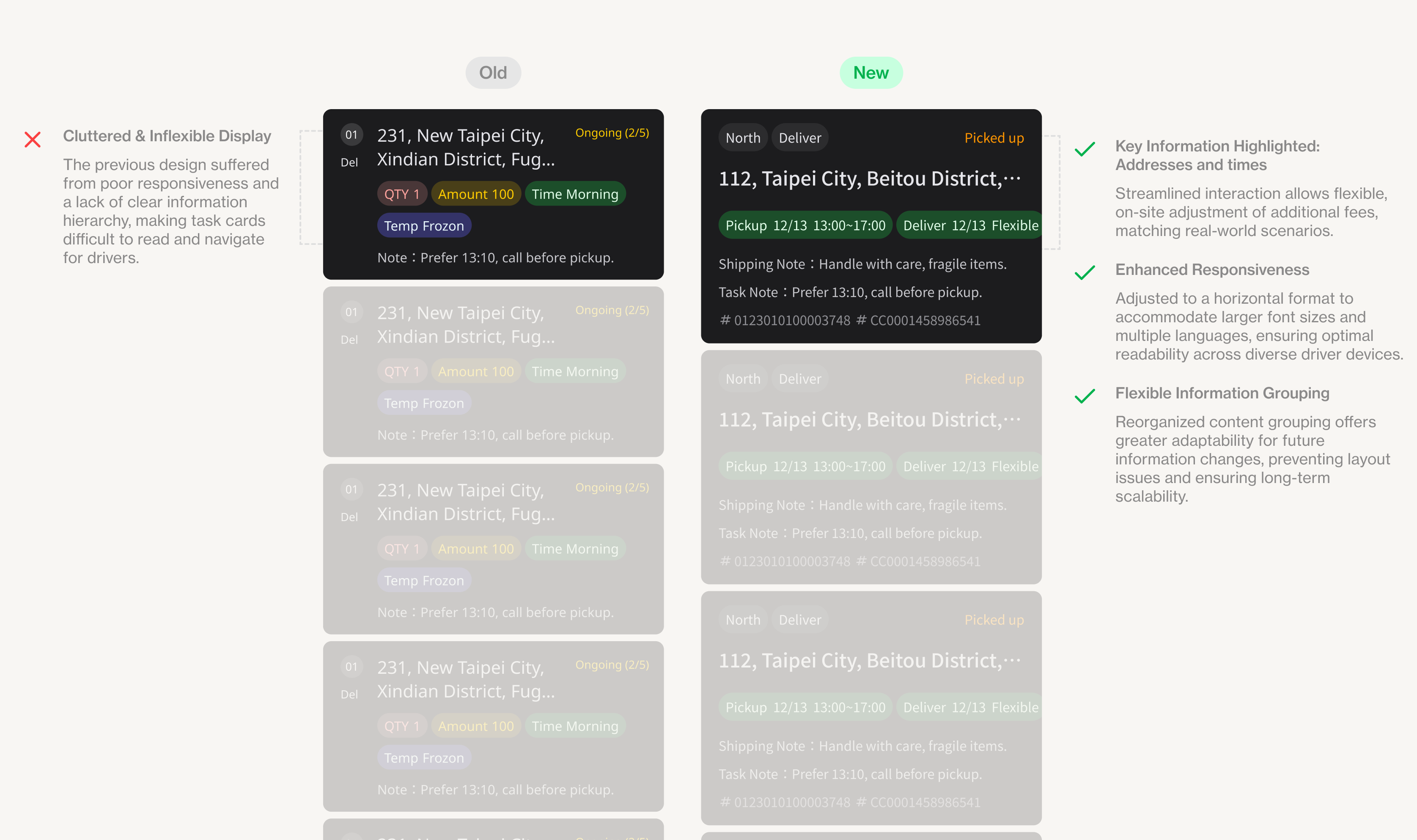
Managing diverse information needs across various logistics companies presented a significant challenge. With a large volume of critical data to display, and considering many drivers were older, clearer and more adaptive information presentation on task cards was essential. I optimized the information layout to address this.
Translate research Insight to Design:
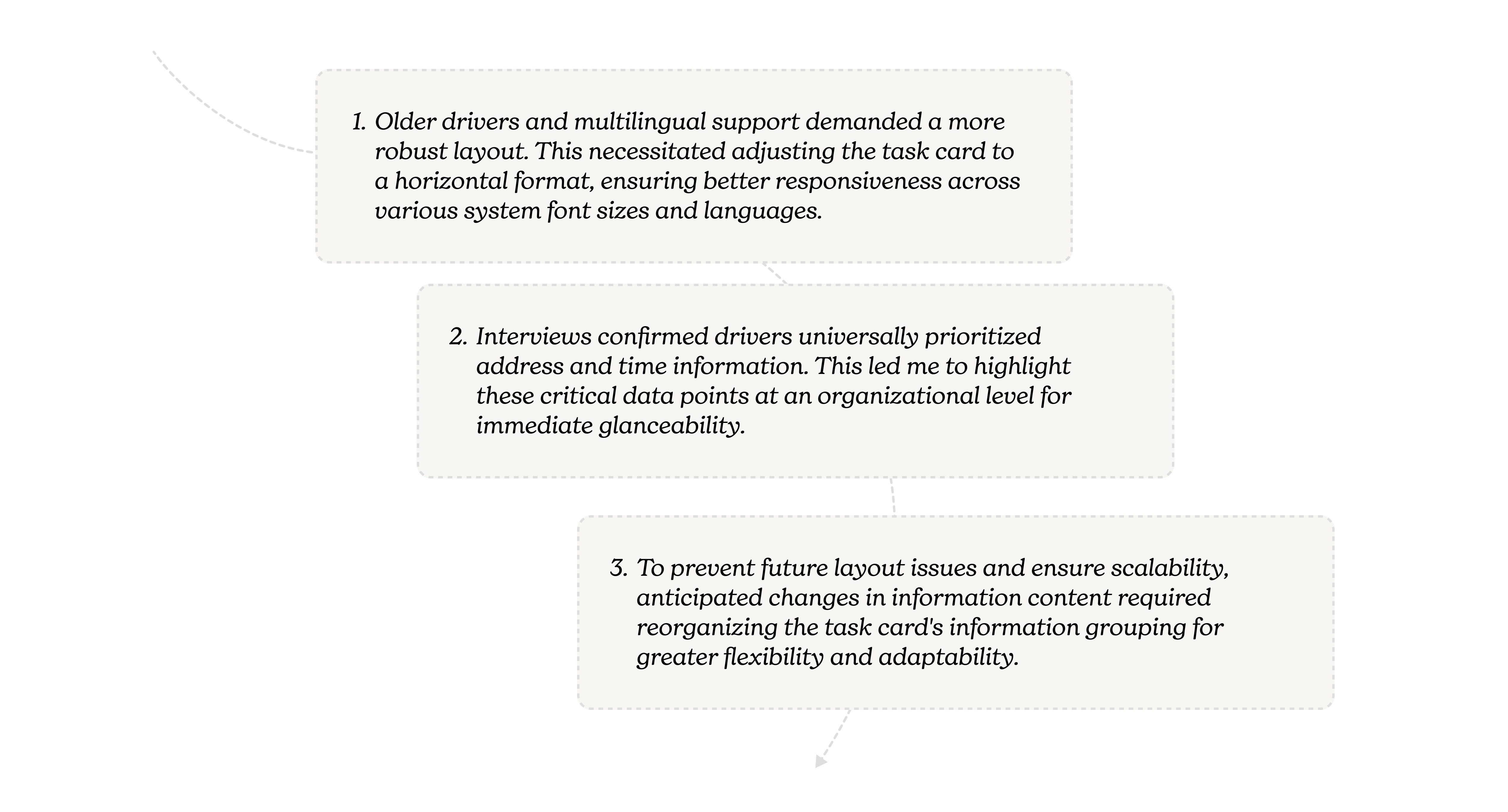
To meet these diverse needs, I redesigned the driver task cards to provide a highly flexible and scannable interface for critical delivery information.
Given the significant amount of dynamic information on the task cards, loading speed was a critical user experience factor. To ensure smoother transitions and manage user expectations during data retrieval, I designed a loading skeleton.
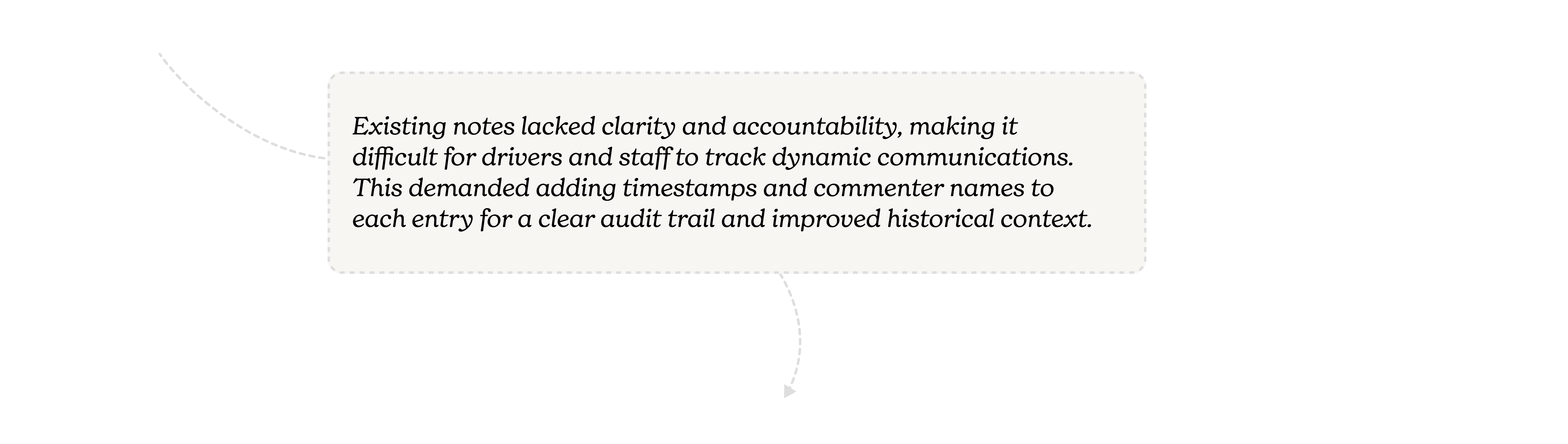
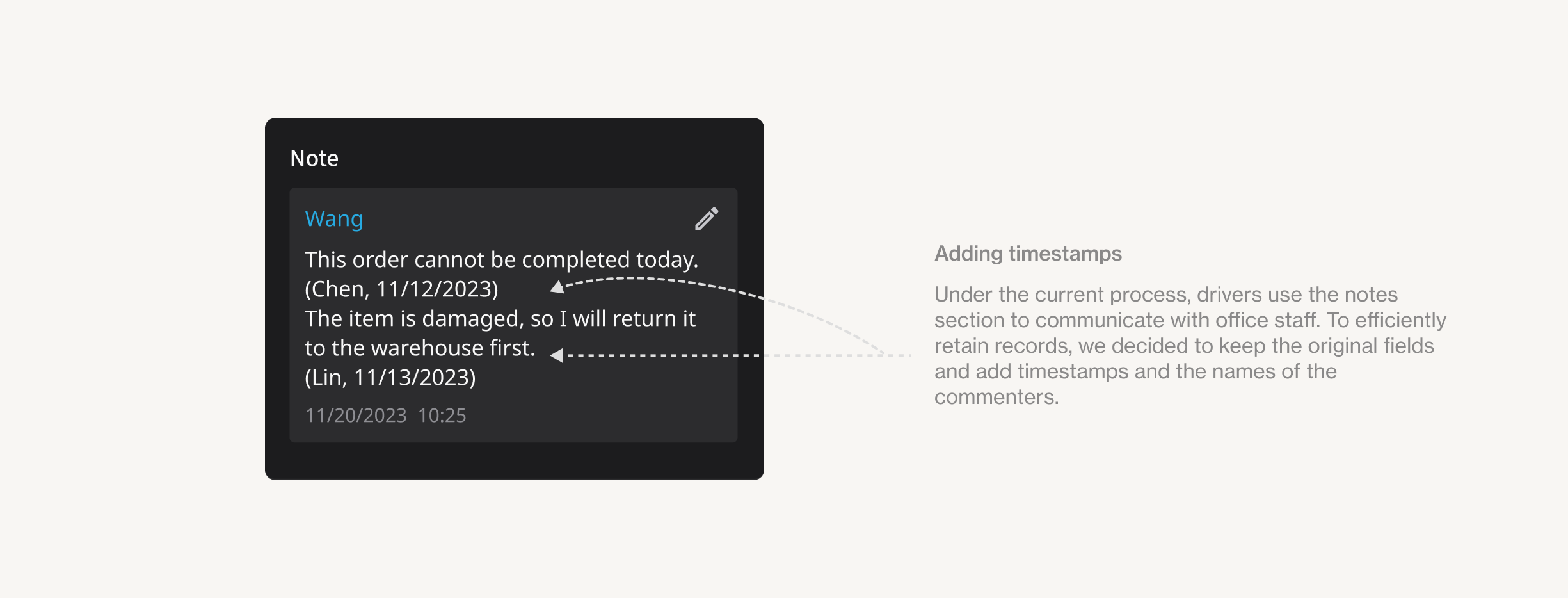
Losing crucial context on incomplete delivery tasks led to communication gaps and inefficiency. I designed a feature to intelligently carry over notes and specific comments to subsequent task assignments, ensuring drivers always had the necessary historical context. Timestamps were integrated to provide a clear audit trail and enhance accountability for dynamic delivery information.
Translate research Insight to Design:
To address this critical need for clear historical context and accountability, I designed the following intelligent feature:
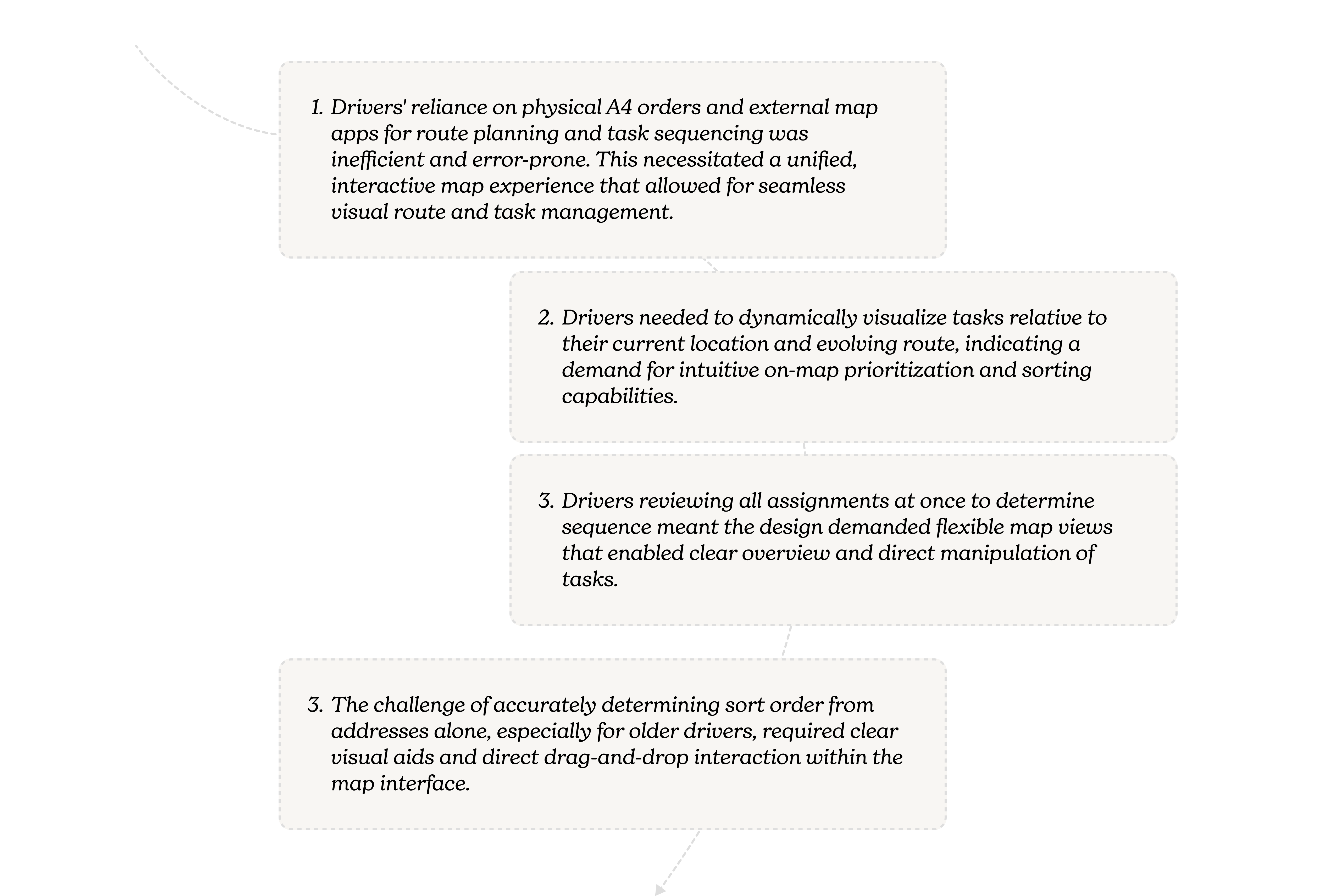
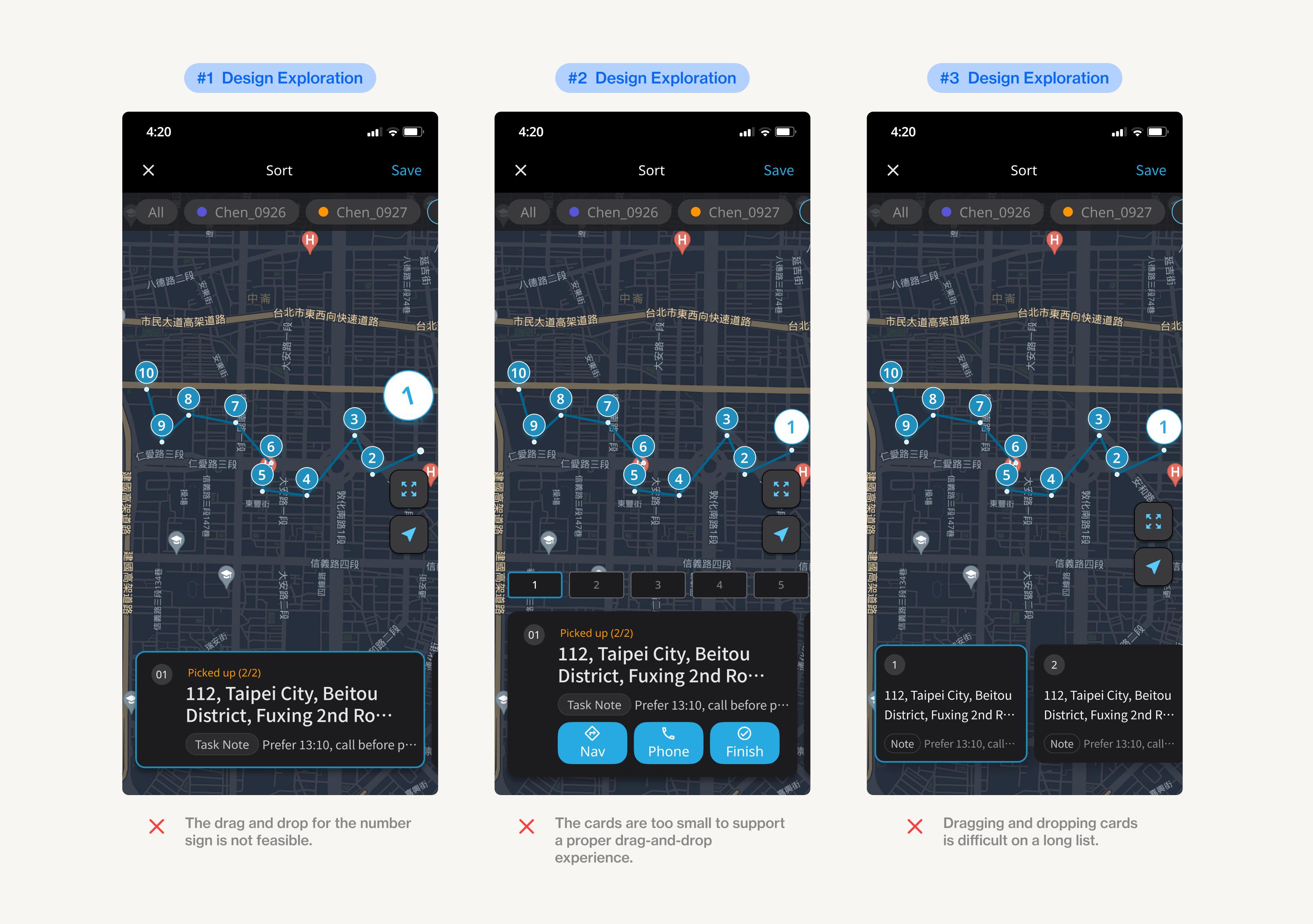
In a real-time logistics environment, drivers were forced to manually juggle disconnected dispatch orders with external map applications. This fragmented workflow led to significant cognitive load and operational delays, underscoring a critical need for a more integrated and visually intuitive solution to manage and prioritize tasks on the go.
Translate research Insight to Design:
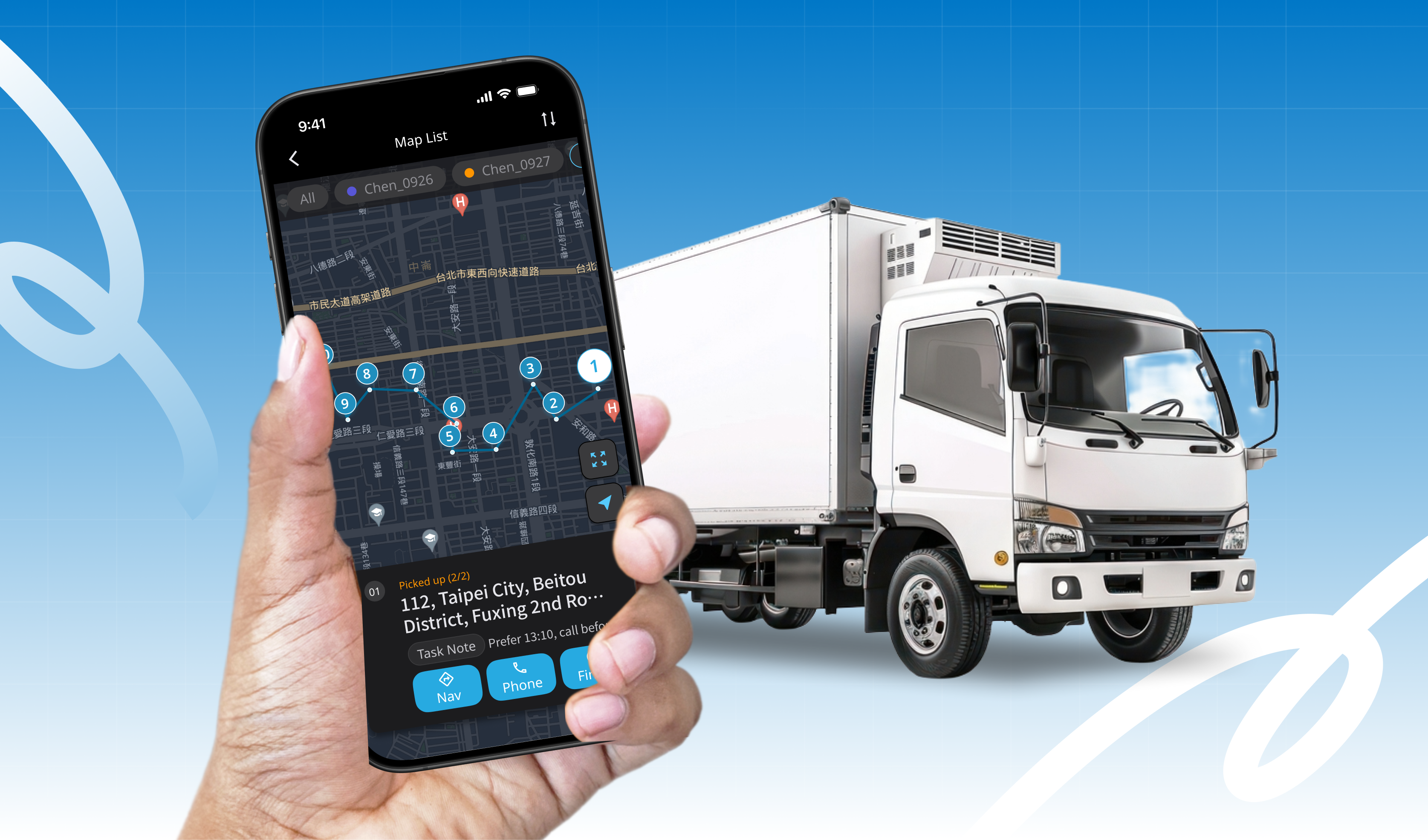
To address these critical insights, I designed a dynamic map interface that seamlessly integrates task management, enabling drivers to plan and prioritize routes efficiently.
Throughout this experience building and maintaining the driver app for Taiwan and Malaysia markets, I got to work closely with C-level stakeholders, business development, and sales teams. Being this close to the business side really helped me understand how the market seesour product and what real customers actually look like. I had the chance toconstantly visit the clients, and through these interactions, I discovered something fundamental about working with customers.
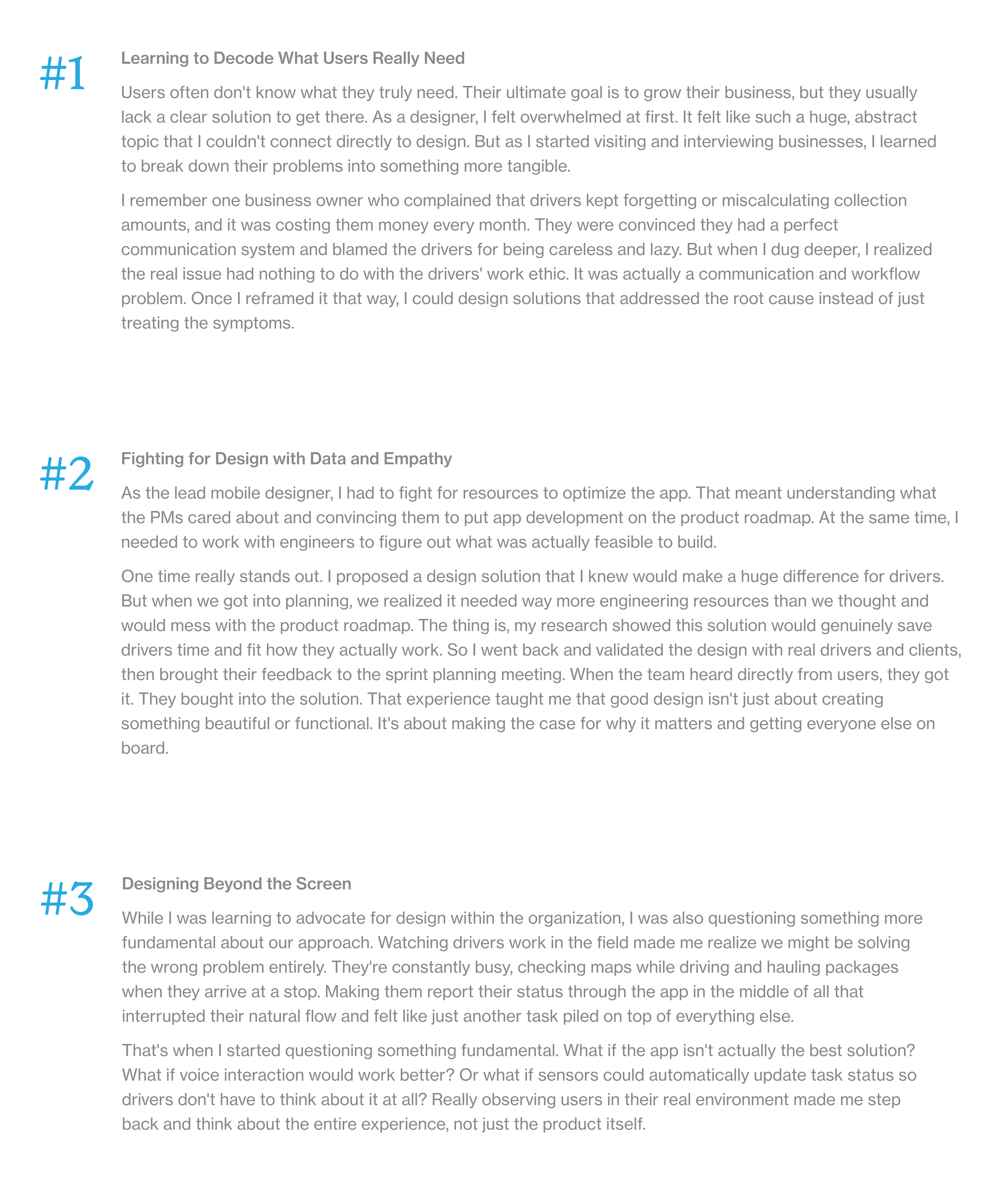
These observations fundamentally shifted how I think about design. If an app can interrupt rather than enhance someone's work, then maybe we need to rethink how humans and technology interact entirely. This realization sparked my curiosity about the future of human-computer interaction. I want to explore what's possible beyond web and app interfaces, like multi-sensory experiences, voice interaction, or AI that adapts to what users are doing in the moment. I want to keep designing products that actually fit into people's work and life, not just add another screen for them to deal with.