
Create a social platform that empowers aspiring artists and musicians to build community and generate revenue.

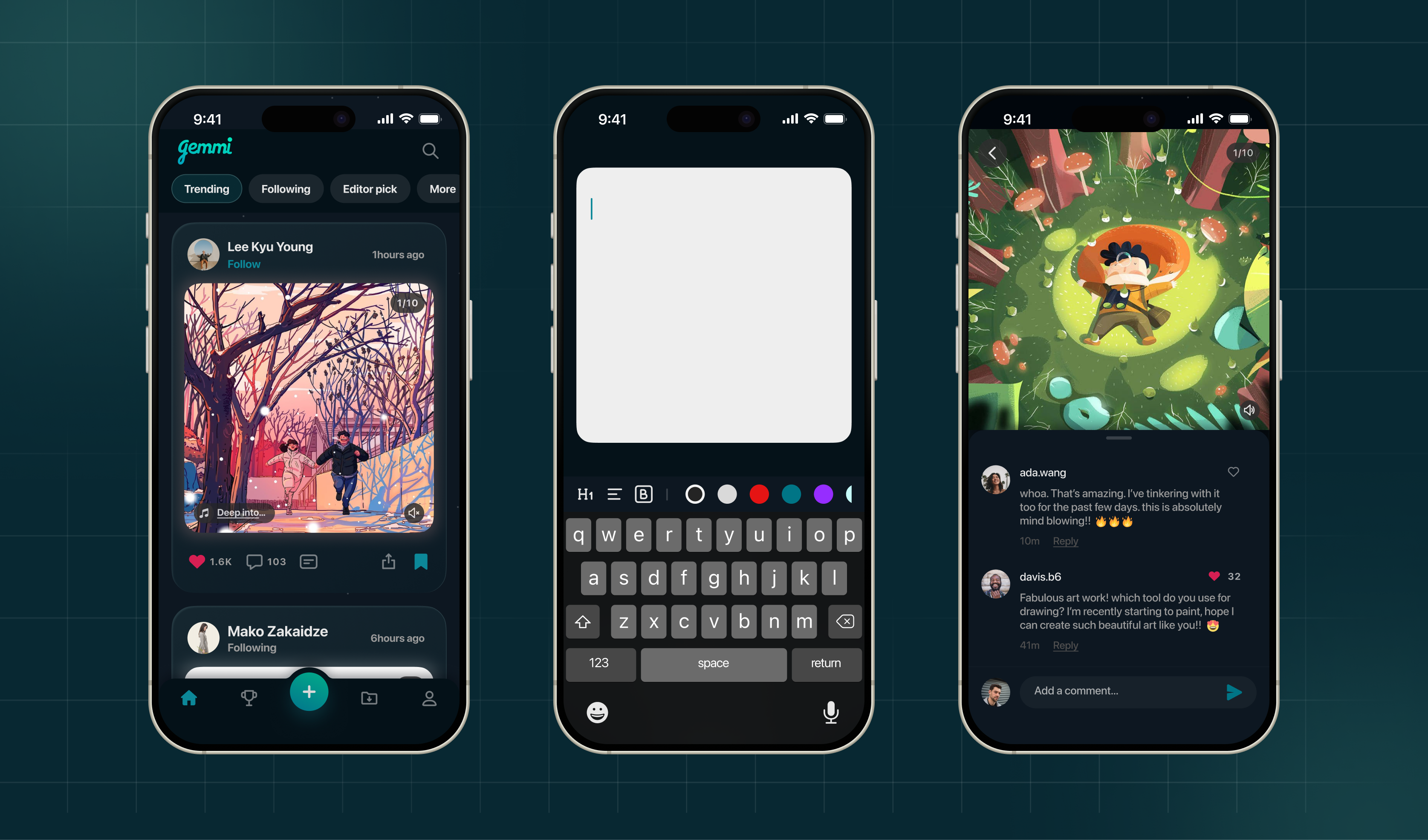
An immersive home feed that eliminates noise and focuses on showcasing high-quality, relevant artwork and music.
Clear organization of library assets and profile information.
An intuitive editor that empowers users to create content effortlessly.
Recognizing a critical market need, Gemmi pivoted from a music game to a social platform to foster genuine artist-fan connections. As the sole designer, my challenge was to create a user-generated content platform from 0 to 1, crafting an experience that empowers artists and their fans.
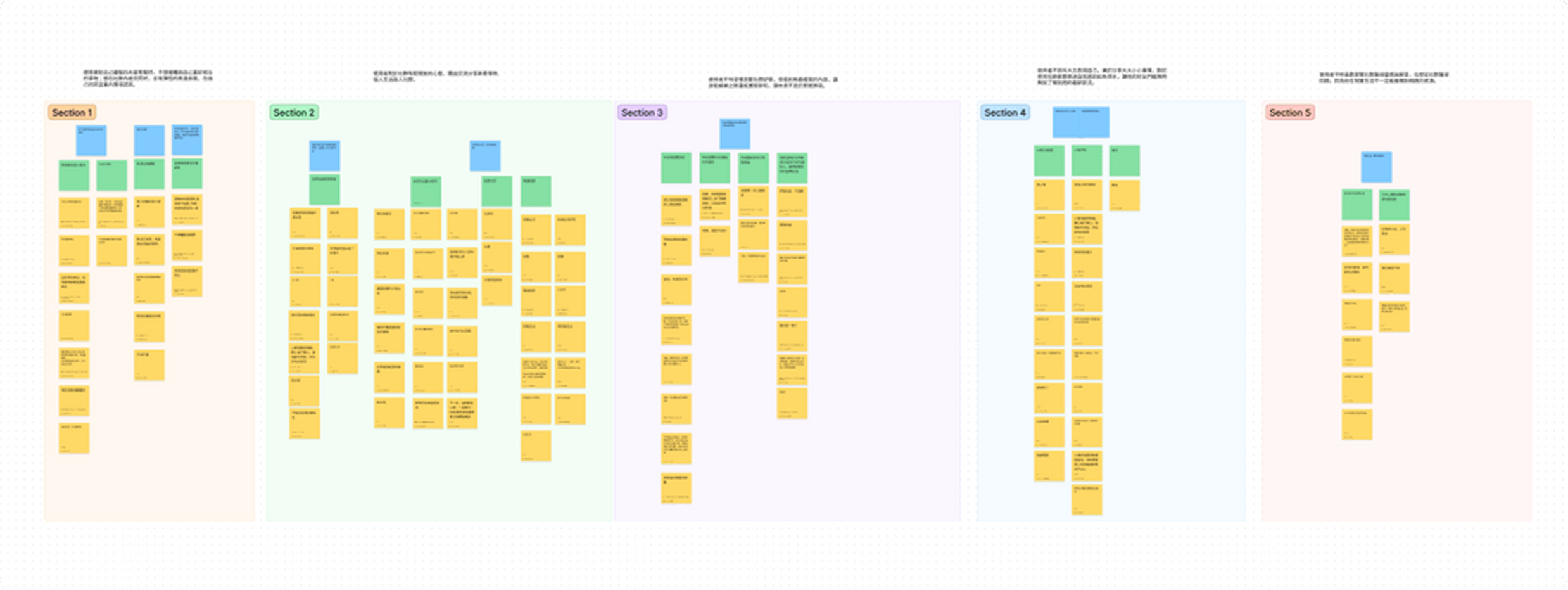
To inform our design strategy and differentiate Gemmi in a saturated market, I conducted mixed-method research. I started with an online survey, gathering 100 responses, and conducted interviews with key stakeholders to understand their perceptions of social platforms, their motivations, and what they hoped to gain.
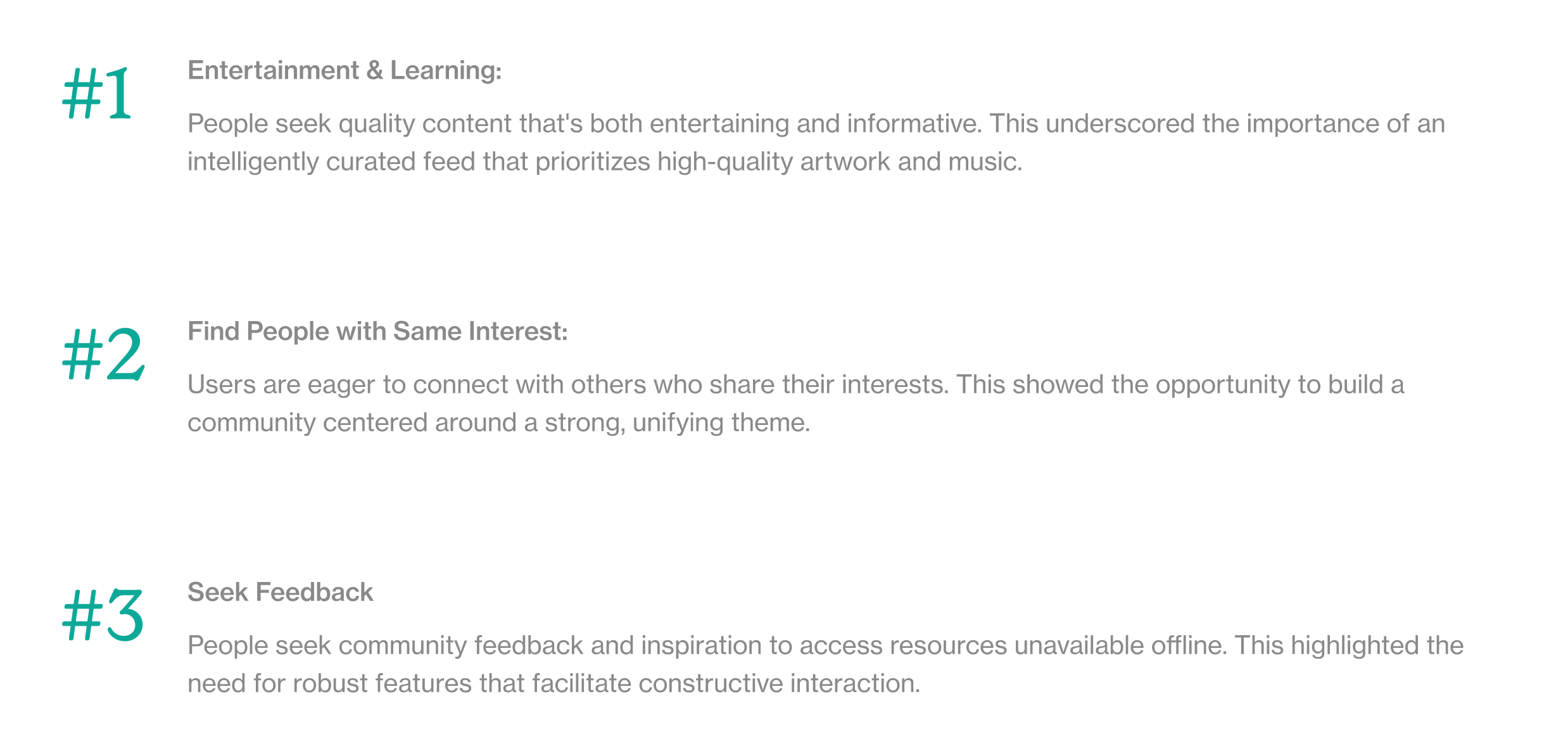
From these research, I gained several key insights:
A competitive analysis confirmed that while the market was saturated with feature-complete apps, most lacked a clear theme or unique value proposition. This highlighted a significant opportunity to design an experience centered around the inherently multi-sensory nature of music to create a focused, purpose-driven platform.
Building on the insights from the research, I formulated a hypothesis statement to guide my design:
After identifying the design goal, I recognized a new set of challenges and constraints. As the sole product designer on a lean startup team, I was tasked with balancing stakeholder expectations with technical feasibility and an aggressive six-month deadline to launch the MVP.
To navigate these constraints, I adopted an iterative design process centered on rapid prototyping and internal testing. I created low-fidelity mockups to quickly align the team on core design goals. By using a prototype for internal testing, I was able to gather crucial feedback from my colleagues, allowing me to rapidly refine the interface and ensure we were on track to meet our business and user needs.
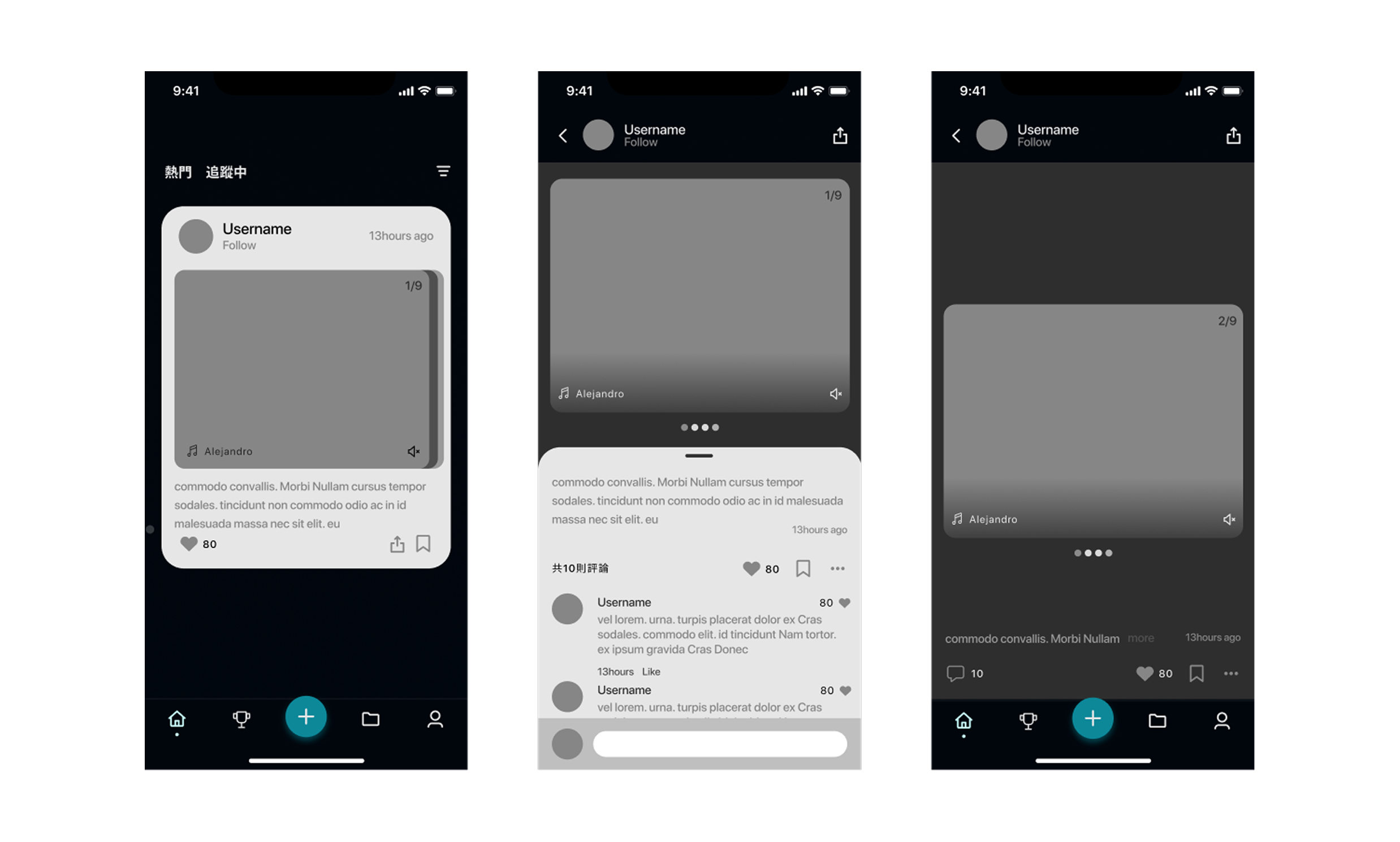
These are the key features of the MVP launch.
The Home Feed was designed to solve the strategic problem of information overload and generic content on mainstream social platforms. My primary goal was to create a focused and immersive browsing experience for users.
To break the rapid-scrolling habit of other platforms, I designed a card-like single-column feed. Each post is visually framed as a distinct "gallery piece," creating clear boundaries that encourage the user to pause, focus, and fully immerse themselves in each individual piece of content. The micro-interactions on the like and saved buttons provide satisfying, real-time feedback to reinforce positive user behavior.
As a core part of the experience, users can preview music at a glance, allowing them to discover new artists without committing to the full post. If the music or artwork piques their interest, they can expand the post for the full, uninterrupted experience, which allows them to continue listening while reading comments and the post description.
The editor is at the core of Gemmi's mission to empower artists, musicians, and their fans. My primary goal was to design a tool that would lower the barrier to entry for content creation while still providing a robust set of features to unleash creativity.
I simplified the editing workflow into two main sections:
The Page Editor:
This is the creative canvas where users can build their posts. I designed a fluid, drag-and-drop interface for users to easily arrange pages and content. A full suite of tools, including music, photos, text, filters, and backgrounds, provides users with everything they need to decorate and express their creativity.
The Posting Section:
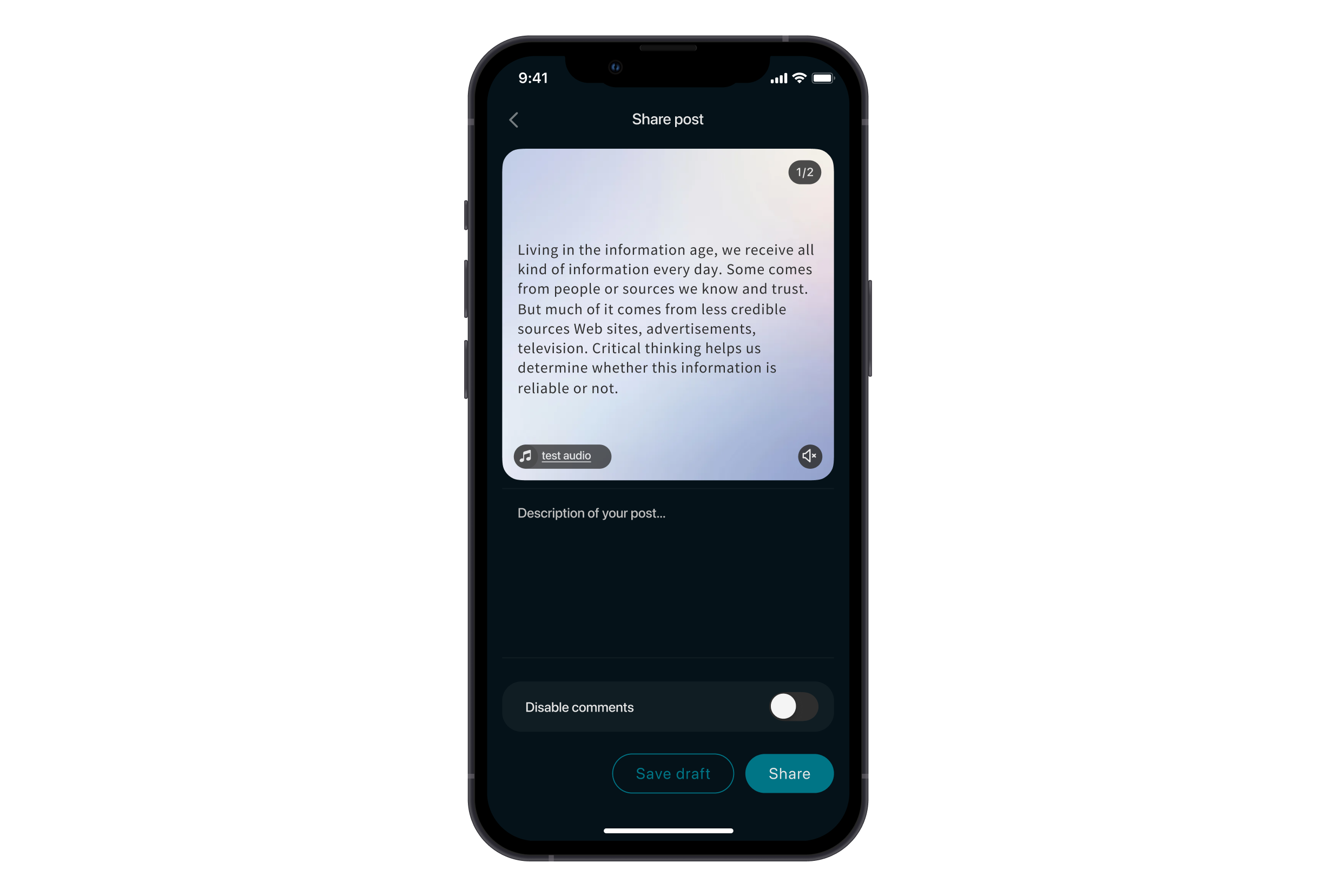
This streamlined final step allows users to preview their post, edit the description, and manage comments with a simple toggle before sharing.
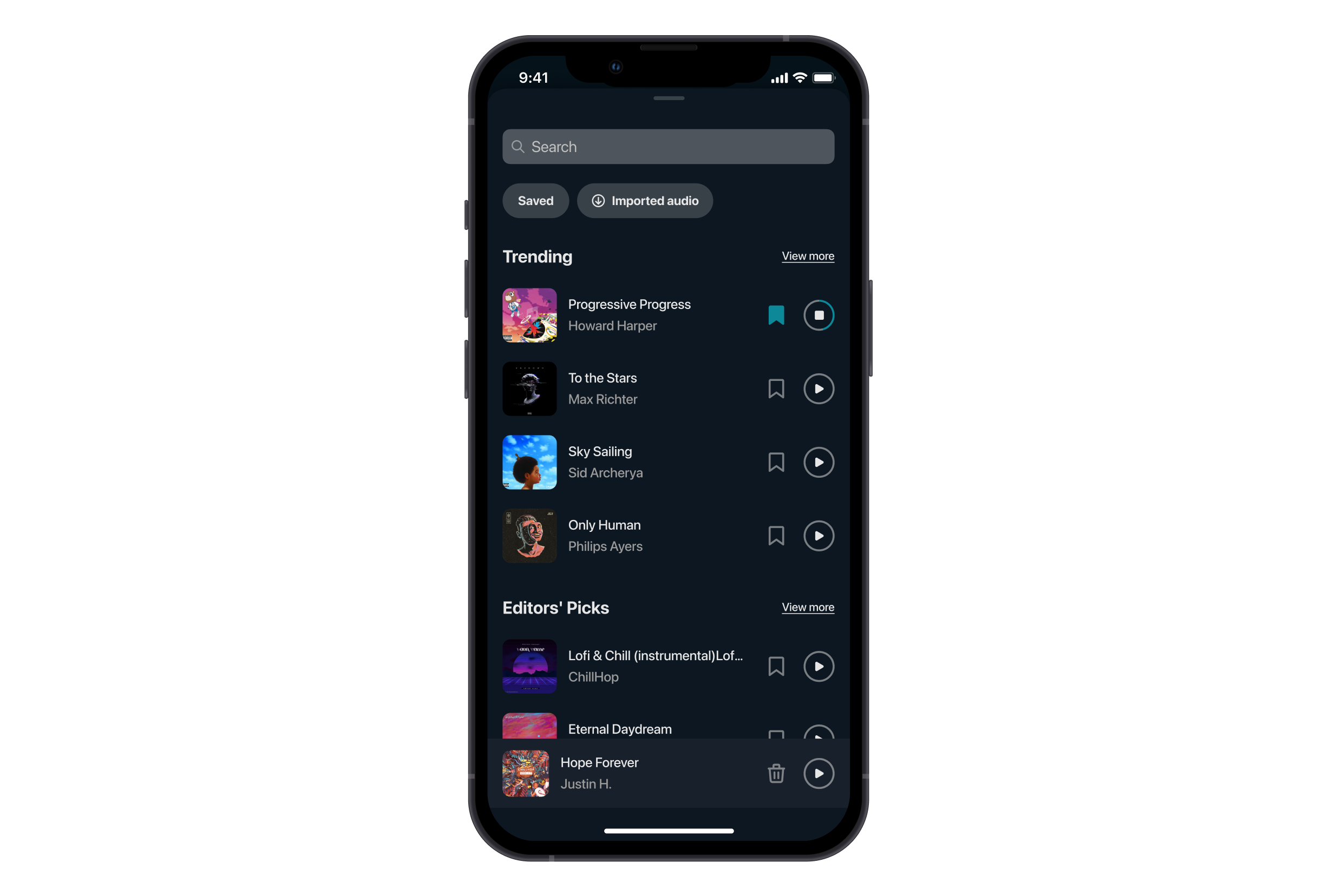
Recognizing that music and audio are essential to the Gemmi experience, I designed a dedicated music tool to facilitate content creation. To help aspiring musicians gain exposure, I created a discovery page with recommendations and a simple search function. A tagging system was introduced to allow users to easily find and switch between music genres.
Additionally, to further empower users, the audio import feature allows artists to upload their own music and audio, giving them complete creative freedom to make unique and interesting posts. The save feature lets users easily organize their favorite tracks, ensuring a seamless workflow between their audio library and the creative editor.
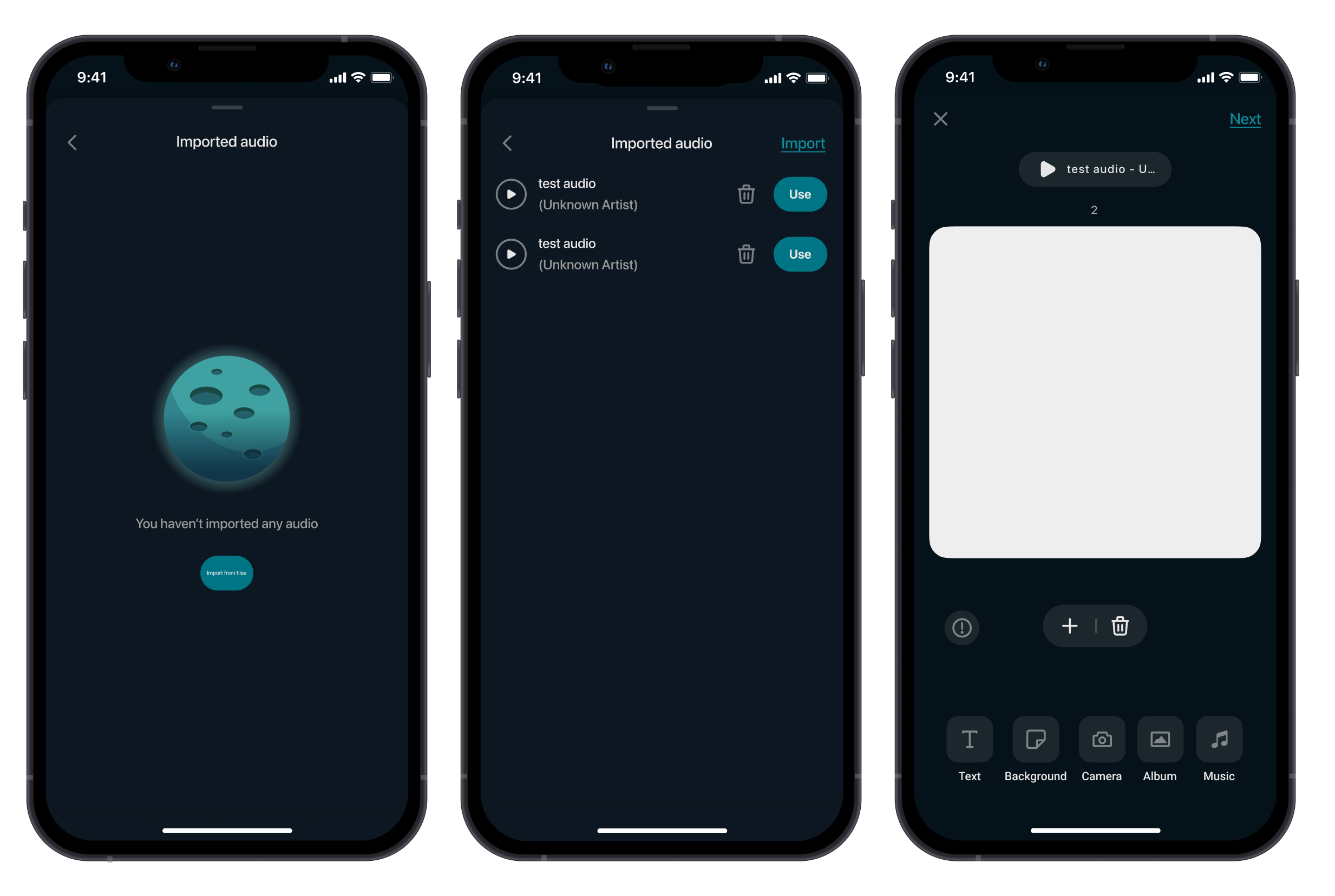
This design delivers an end-to-end creative workflow that is intuitive enough for anyone to use, yet powerful enough to produce high-quality, multi-sensory content.
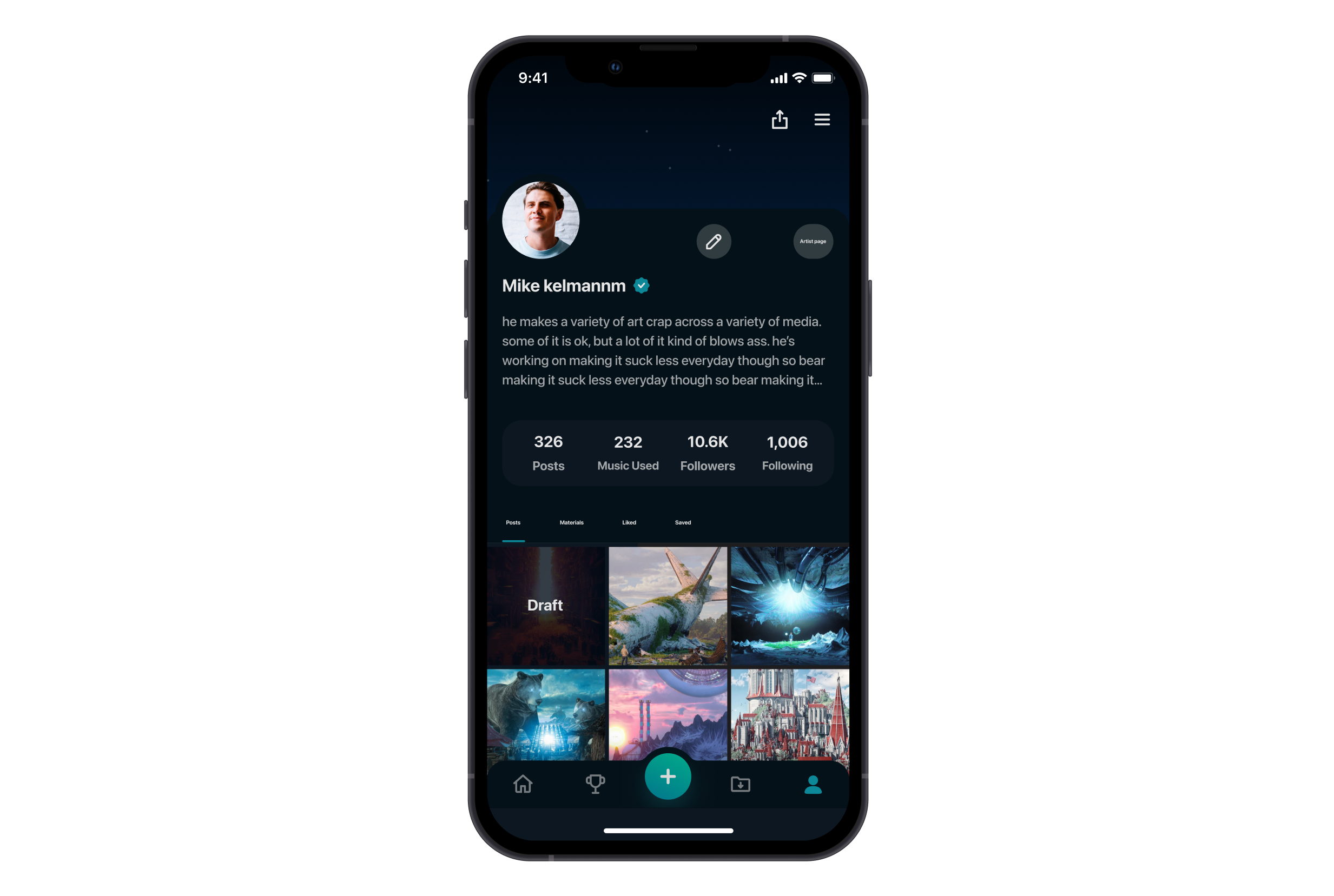
The Library and Profile features were designed to act as a centralized hub for creators, providing them with a professional and organized space to manage their work and identity.
In the Library section, I designed a streamlined asset management system where users can easily browse and discover music and background materials. The addition of a tagging system allows them to quickly find new inspiration and organize saved content.
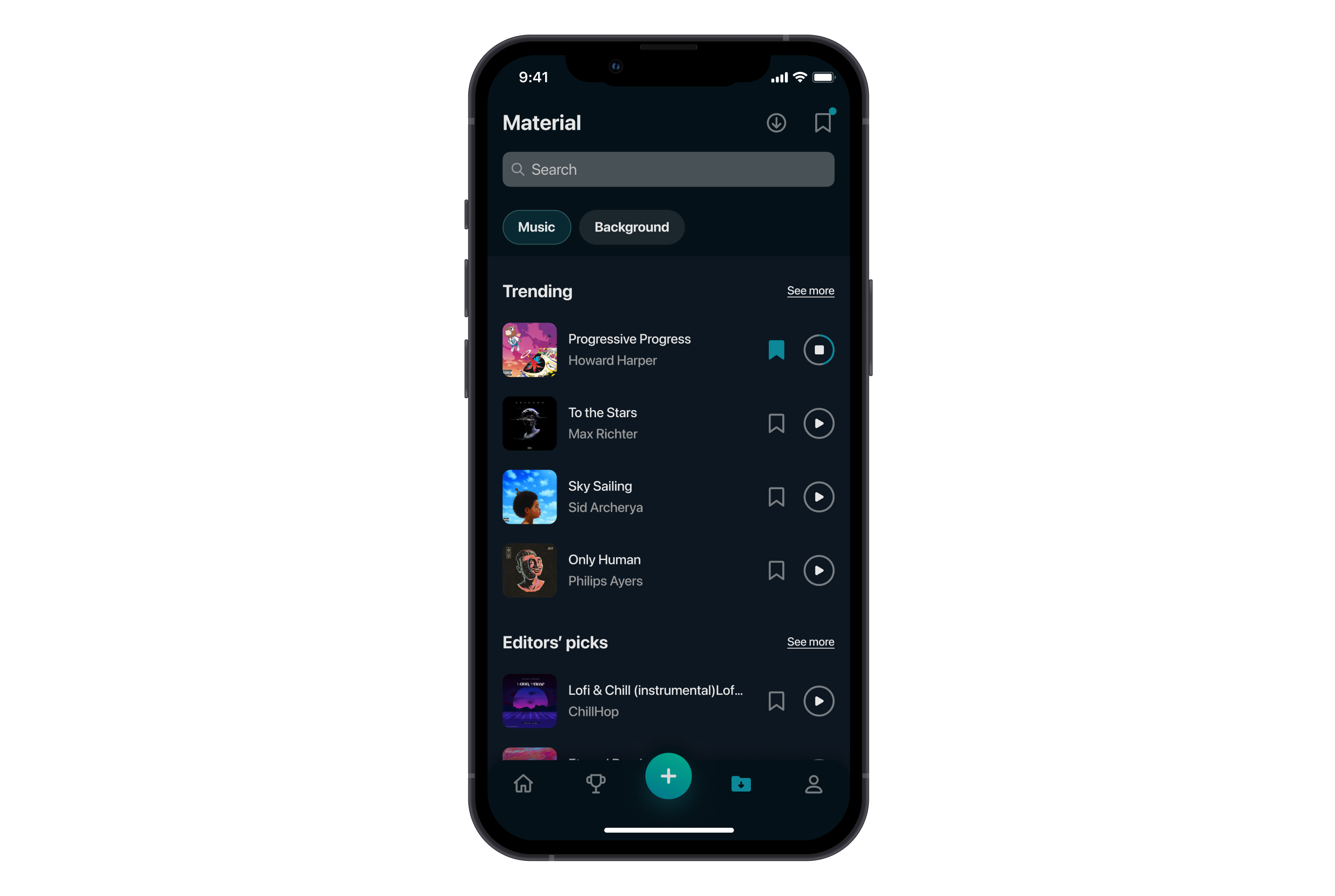
The User Profile serves as a curated portfolio for every user. It provides a single destination where users can view all the posts and materials they have created or saved. By centralizing this content, the profile empowers artists to showcase their work, build a professional identity, and give their fans a clear destination to view all their creations.
Creating a feature from 0 to 1 isn't easy. This experience taught me that design is only a small part of this job. The most challenging part is bringing everyone onboard, and it takes countless stakeholder alignments. From aligning the feature with C-level stakeholders and product owners to checking the feasibility of a small interaction with engineers, every step requires collaboration.
Before this project, I thought designers should advocate for users and care about their craft, and that's it. But through countless iterations, I learned something important. Stakeholders are also users. Engineers are the first users because they receive the handoff. PMs are users too because they get to see their vision and strategy come to life. Understanding this shifted how I approach design. It's not just about creating the best solution for end users, but creating something that works for everyone involved in bringing it to life.
Beyond understanding people, I also learned to think more systematically about the design itself. To design a feature this big and bring all those stakeholders along, I needed to maintain consistency across the entire experience. By learning to use components and design tokens, I could iterate on different designs without worrying much about visual consistency. This systematic approach also helped me communicate with engineers more effectively, as we were speaking the same language about reusable patterns and scalable solutions. In a way, building with a system became another tool for collaboration.
These two learnings, collaboration and systems thinking, are deeply connected. For the future, I want to keep gaining experience in cross-functional communication and continue developing my system thinking. I'm particularly interested in mastering design systems, not just as a tool for consistency, but as a way to scale impact and enable teams to move faster together.